Duty and Obligation
As we vest in the sacristy prior to mass, whoever is preaching is asked to summarize their homily in a sentence. So Father asks me and I respond “Participation in the process is a duty for us a citizens; discernment is an obligation for us as disciples.”
It may look to some like our Lord is separating religion from Caesar, but a closer look shows us pretty clearly that he’s not separating at all but rather placing both in their proper order. What belongs to Caesar is what belongs to any sort of government, and it doesn’t much matter how big (or little) Caesar is. Whenever a few of us gather to decide on the solution to a problem or any course of action, you’re going to find politics. Government is how a group of people figures out what to do next, whether is a book club, school board, city, state, or nation. It has a proper role, and there are things that “belong” to that role.
But Jesus goes a step further: we give to God what belongs to God, and that’s basically everything, including Caesar. There isn’t - indeed there can’t be - any separation between what believe as disciples and what we do as citizens. The coin bears an image; so do we. We carry this image everywhere we go and this means beyond our times of prayer or adoration, devotion, or worship. It’s visible for all to see, and especially so out there in the world.
As disciples we’re sent out there to be salt and light, and we render everything we have, everything we are, and everything we do back to the God whose image we bear. And so we must discern, constantly, what it is this image means for us, particularly when we are deciding something.
- Does this thing we’re deciding or doing offer a preferential option for the poor?
- Does it provide or deny something that is justly due to another?
- Does it create or destroy solidarity between us and our neighbor?
We’re called to discern the answers to these questions, so we should ask them frequently and vocally. We may find that if we do, we also find ourselves a little adrift in the current landscape, swaying this way or back according to the waves and currents. Again, it doesn’t matter if we’re talking about a committee in a parish, a council in a school, the legislature. Ask ten people a question and you’re going to get eleven opinions. Remember the image we bear.
You may feel a bit out of place; this is to be expected. Our citizenship is in heaven, but our tasks are here. None of us were promised a rose garden. Remember this: if you feel like a bit of seaweed moving back and forth, you are also firmly rooted on rock. From that firm spot, we can always learn, discern, and act - confident that no matter how frustrated, tired, anxious, or disgusted we might be at times, we know how the story ends: in triumph, for all things find their ultimate fulfillment in Christ Jesus.
"Citizens of two cities"
So a replacement thermostat took about five minutes to install and is working fine, so there probably was something wrong with after all. No matter. I can fiddle with the temperatures on my phony. Finally. I’m chalking the entire experience up to: possibly faulty device compounded by user nitwittedness.
Other repairs: ice maker thermistor replaced, the plumber fixed a leak upstairs, and I swapped out some light fixtures. It’s been a very productive couple of days and we wrapped it all up in time for the arrival of all the rain, which we needed desperately. We got a lot of it, and it tapered off just in time for our son’s wedding, which was held outside. There was a backup rain-plan in place but it wasn’t needed. Everyone had fun and it was a blessing to be together with so many friends and family! May God bring to completeness the good work that He has begun in them.
As for us, we decrement the kid counter by one, though their apartment isn’t terribly far away. I expect we’ll see them on the regular for Sunday dinner.
Still meditating on the gospel for next week which isn’t so much about separation as it is about a proper ordering of things. In fact the council fathers called the strict separation of faith and public life “among the more serious errors of our age” in Gaudium et spes. Lots to chew on. I’ll spend next week’s business travel ruminating.
User error
So an HVAC tech came by today, examined everything and declared that all the wiring was normal. We switched out one more part and everything just worked like it was supposed to. The part is the backplate for the Ecobee, which is basically just a small terminal block for the thermostat wiring. The unit itself mates to the plate via two rows of pins. At first we thought the backplate could somehow be bad, but after he left I checked continuity across all the terminals and it seems fine. This is good news and bad news. The good news it’s fine and returning it is probably pointless.
The bad news (which is actually good news) is that this whole thing was likely just an error on my part: a wire, probably G, wasn’t seating correctly, set deeply enough in the block, or something like that. I’ll take a run at installing it for the upstairs system later tonight. In the meantime, the downstairs is very intelligently air-conditioned.
Spent most of the day doing a garden cleanup, then planted all the winter annuals: pansies and mums. We’re all set, if we could just get a bit more rain.
I’ve also enabled cross-posting to Threads again, so: hello Threads!
Politics
Closing in on the end of Augustine. I’ll probably stick with him for awhile. I did one of my capstone papers on the first half of City of God and didn’t spend too much time at all (which is to say: none) on the second part (Books 11-22).
This gap is on my mind at the moment; looking ahead at the preaching schedule I see that the readings for my next turn in the ambo are as follows:
- Isaiah 45:1,4-6 (“Thus says the LORD to his anointed, Cyrus”)
- Psalm 96 (“Give the Lord glory and honor”)
- 1 Thessalonians 1:1-5b (“For our gospel did not come to you in word alone…")
- Matthew 22:15-21 (“Whose image is this and whose inscription?")
So at first glance: authority, government, church and state, &c. Just in time for election season, too, so it’s providentially well-timed. Many years ago, I treated politics as something of a substitute for sports. I kept up with all the different races across the country and listened to a lot of political talk-radio stuff. Somewhere along the way, the disappointment turned into disgust and I dropped out of it completely, settling for a sort of political homelessness which continues to this day.
During a pre-formation conference with the vocations director, the conversation moved towards politics and I was told that, even having started the process, I should begin tempering my political opinions and moving myself towards the Church’s position. Was this going to be a challenge for me? Even if your brother runs for city dog-catcher, you can’t put a sticker on your car. Not as a cleric, and probably not now, since people will be watching you closely.
“Not in the least,” I recall saying. The focus on parties and candidates gives way to careful examination of programs and policies to see how and where they intersect with Church teachings. It feels almost sort of mercenary; picking and choosing from across the landscape those things which work and those which must be rejected out of hand. When I’m asked where I land on the spectrum, I point to the Catechism. There’s my platform. My bishop speaks, there’s the yardstick.
Yesterday afternoon we did a Blessing of the Animals. There was a great turnout. Mostly dogs but a surprising number of cats in carriers too! One person brought their guinea pig and there was also a tiny gecko. No farm animals or birds, which surprised me.
Beguiled
The crows above the forest call;
Tomorrow they may form and go.
O hushed October morning mild,
Begin the hours of this day slow.
Make the day seem to us less brief.
Hearts not averse to being beguiled,
Beguile us in the way you know.
— Robert Frost, “October”
I scratched an itch and started looking at solar power again. I love the idea of it, but the economics don’t really work for us. The money we’d invest in a full system for our house (and yes, I’ve got the six-figure estimates) wouldn’t see a payback in enough time to be worthwhile. We could invest a fraction of that in increasing efficiencies around the house and probably see better return.
To that end, I figured I’d start with low hanging fruit and replace our older programmable thermostats with some newer, WiFi-capable smarter ones. Since I do not want any sort of subscription element or cloud-dependency, our choices came down to Ecobees or one of the Honeywells. I opted for the Ecobee Essential. Smart enough to do the job, simple enough for my needs, and priced about right.
“Installs easily,” said the reviews. I popped off the old thermostat, noted which colored wires went to which terminal and made the switch. Nothing. I re-checked the breaker; it was on. I called Ecobee’s support and a very helpful, very polite man in Toronto walked me through some troubleshooting and we determined that while I had thrown the breaker for the compressor outside, I had forgotten to throw the breaker for the air-handler in the attic. At some point some wires had touched and I blew a fuse. Off to the hardware store to pick up some 5A fuses.
I put it all back together and lo, it powered up. I configured everything and then tried to lower the temperature. Nothing. This time I contacted support via live-chat. Another helpful specialist walked me through several more tests and in the end we determined that the unit was probably a dud.
Well, I told him, I have a second unit on-hand which I had purchased for the upstairs system. We both agreed that the likelihood of two bum units was pretty low so I prepared everything to try the second unit, which also powered up but likewise didn’t seem to actually do anything. Couldn’t turn on the fan. Couldn’t start the AC or heater. Time for a third call, and yet another helpful person walked me through an exhaustive set of tests whereby we determined that something is squirrel inside the air-handler. The old thermostat works fine. The new one doesn’t, though both are wired identically and correctly. She suggested I call an HVAC tech so I reached out to the folks who installed this system a couple of years ago. Everything else, as far as we could tell, was configured and wired exactly as it needed to be. The system, for its part, could be manually started by touching various wires together, so we know that part is good too. It’s a puzzle for sure.
While I wait for a call-back, I uploaded installation manuals for the handler, compressor, and heating system to Claude and started asking questions. There was lots of back and forth, and it seems that the likeliest explanation is a field-modification of some kind to the standard wiring. This triggered a hazy memory; my wife recalled that something ‘had to be done’ in order to enable an auto-hold function on the old thermostat. You can set a temperature and the system will either heat or cool to hold it there. We sort of liked this at first but eventually stopped using it - I don’t need the heat coming on as often as it wanted to. One early theory of Claude’s was that the solid-state switching in the Ecobee wasn’t sending enough juice to kick the blower on, but it’s more likely that there’s just an oddity in the wiring inside the handler.
Our system is fairly run-of-the-mill: a common make and model of air-handler (Trane) and a pretty straightforward heat-pump (American Standard, which is basically Trane). It was recently installed without any customization or weird mods. I’d expect to see widespread reports of incompatibility but haven’t been able to find any. Most everyone, as far as I can tell, finds a way to make these things work so I’m confident we will too.
I will certainly keep this multi-day project in mind the next time I see “installs easily,” though. I spent yesterday afternoon furiously restoring everything to status quo ante so that my wife would not come home to me having to explain why the air wasn’t working. The old thermostat went back on quickly enough and everything just works again.
Some rain expected this weekend. Next weekend our second son is getting married so the intervening days will be getting gradually more chaotic. This will be the last of the big events around here this year until the holidays roll around. It’s been a long time in coming. Hard to believe it’s almost here. His fiancee has already moved into their new apartment and he’s been schlepping his stuff over a load at a time. Most of it’s gone. Soon he will be too and we’ll be down to three kids at home: two in high-school, one in middle-school. The two older kids are in the rowing club and head to the lake after school so we don’t see them most weeknights until around 7:00.
We wrapped up Silo Season 3. Very excited for the conclusion next summer. On-deck: the latest Slow Horses and probably some other stuff I can’t recall at the moment. Nothing new bookwise.

Wach' ek'ojol?
It is noon, and the temperature has only gotten to 70 so far. The sky is overcast, and there’s a bit of mist falling now and again. Someone flipped the autumn switch, and here we are. Yesterday at this time it felt like close to 100. It’s supposed to last through the weekend, which means the parish’s fall festival will just be perfect weather-wise. Nice and cool. Maybe not so great for those of us who are scheduled for a session in the dunking booth, but it seems like a small price to pay. As long as we’re getting better weather, we could use some rain but maybe after the festival, please.
I spotted a large orb-weaver high up between a couple of trees, and it’s about time. Most of the smaller trees and bushes have gone straight from green to brown, but the maples are showing a bit of color as the daylight’s been decreasing. So all the ingredients are here: clouds, spiders, leaves, and cooler nights.
Proust: I’m taking my time with Finding Time Again. Charlus has become more sympathetic to me (and Albertine less so) as things head towards the end. The eruption of World War I seems all the more world-ending when seen from within the final moments of the fin de siècle, though maybe that’s because we know that it’s really only the beginning of much more horror. One wonders what the Verdurins would have made of the coming Vichy years. I expect they would have been just fine.
The house is quiet lately. Everyone’s in school, and our one college kid still at home is about to get married, so he’ll be shipping out to their new home in just a couple of weeks. They’ll still be pretty local, so I imagine we’ll still see them quite a bit on weekends and such. During the day it’s just me, the two dogs, and the cat. The dogs spend most of the day snoozing or rough-housing. There’s no in-between. The cat, for her part, spends all of the day asleep in one of her appointed spots, one of which is in my office by the window.
The adjustment has been gradual - two of our girls moved out during the summer, and three others have been on their own for a while. By next month we’ll have three kids at home, and it hasn’t been that way for a very long time. Things are quieter, as I’ve mentioned. I’m cooking for fewer, which is a big change. We’re now very close to cooking most recipes at the normal serving size instead of trying to scale them up, which usually works, but sometimes doesn’t. The housework is ramping down just a little, and the remaining kids will have more space of their own. I will certainly miss the constant level of commotion, but I think I can be OK with a bit less chaos in the household. The shorter lines in the laundry room are nice, in any event, as is getting the bonus room cleared of everyone’s temporary storage.
In other news:
One of the constituent groups in our parish community is Chuj - a Mayan community indigenous to Guatemala, and not just Guatemala, two specific places in Guatemala. To be even more precise, our community hails from one of those places: San Sebastián Coatán in Huehuetanango, which lies on the border between Mexico and Guatemala. There seems to be a substantial Chuj diaspora in the US; there’s another community further north in Indiana which got written up in National Geographic awhile back.
Nearly all of the Chuj in our parish speak Spanish; they also speak Chuj. All of the younger folks and kids speak English to boot.
Once a month, they lead the prayers of the faithful during Mass in their own language, though there’s a bit of Spanish mixed in as well. I can sometimes pick up a word or two, but the language itself fascinated me so I’ve been trying to learn a bit of it: basic phrases and so forth. I enjoy the challenge, and the people (for their part) seem to appreciate it and also react with hilarity.
The Academia de las Lenguas Mayas de Guatemala has published several resources on Chuj. Still, there are substantial regional differences between the language even though the two communities aren’t terribly far apart. For grammars and lexicons, I have to make sure that they cover San Sebastián usage and not San Mateo. There’s some overlap - the two communities say that they’re mutually intelligible, so maybe it doesn’t matter too much. In any case, I uploaded all the grammars, lexicons, and word-lists I could find into a Claude project and interrogate it regularly for the ins and outs of the language.
A in tik, to tzink’ayb’ej ti' chuj.
As soon as I have that memorized (“As for me, I am learning Chuj”) I’ll dare to run it past one of our folks to see. It should get big yuks; I’ll take them.

Inspired by these poster prompts which I found in some HN comments, I revisited my fictional travel poster stuff from awhile back. If I were an English teacher, I’d have a room full of these.

Open our hearts, O Lord
Some thoughts around the readings this weekend.
He sent them into his vineyard
The landowner hires his workers, negotiates a daily wage, and sends them into the field. He returns to the marketplace several times throughout the mid-day and afternoon to hire and send. At the end of the day he calls them for payment. They watch as the ones who had only worked for an hour got the full day’s payment. Surely, they think, this means we’re getting more. They do not get more. They get the same as the the latecomers. This is, one of them points out, manifestly unfair. We bore the day’s burden and heat and yet you made them our equals in terms of payment.
Unfair? asks the landowner. Did we not negotiate terms before you began? All has been done justly - the worker has received his promised wage before the day’s end. Nothing has been withheld. I am free, reminds the landowner, to do what I want with my own money.
As high as the heavens
One of the two most common ways of reading this passage is to pencil in “The People of Israel” for the all-day crew and the “the Gentiles” for the latecomers. Our Lord uses this parable to show that the Kingdom of God is, radically, open to all, and not just the Jews, who have ‘born the day’s burden’ one way or another since Sinai.
The second way is to regard the day’s labor as a human lifespan. Converting to God can happen at any time throughout a life, and the reward is the same: eternal life. What’s important isn’t when the worker arrives, but rather that the worker arrives, having answered the call in the marketplace. He is, as the Psalmist reminds us, near to all who call him.
Isaiah reminds us to Seek the Lord while he may be found. Do not wait. Seek. Actively search, even up to the final moment of life on this side of the veil. He will meet you, and restore you to your place.
Does this scandalize us? I think sometimes it does. It feels manifestly unfair that one who commits heinous crimes in life can, on a deathbed, experience the grace of true conversion. Why should we bother living a good life at all if we can just turn it all over at the last second? We do the right things because we were told to and because, with God’s grace - and only with God’s grace - they turn out to not be so burdensome after all. We do it to form the habits, to develop the muscle memory needed to open ourselves to more of the grace which them drives us to the work, and so on. We hold out hope for the worst of sinners so we do not despair of ourselves, especially as we call that as He is Mercy, so is He also Justice. Mercy will be given, and Justice will be done, to all of us.
Caught between the two
What would things look like if the parable were turned inside out, if the first workers rejoiced every time new laborers entered the field and they gathered to congratulate the latecomers on their good fortune. If instead of grumbling, there was rejoicing in the generosity of the landowner? Look at what you have received, says the morning crew. The same as us! Isn’t it wonderful?
It sounds fantastic but it’s honestly what goes on every year in OCIA. People from all stations of life: young, old, married, single. They come with questions and the workers - our catechists - rejoice and share everything they have with an eye towards the fullness of faith, communion, the Eucharist. Adults come to OCIA with adult questions and they bring their experiences of life with them. They’re met by other adults who are at work in the vineyard. They’re welcomes, “shown the ropes,” and folded into the community. What they receive is far more than any wage, and we really can’t say that any of us have ‘earned’ it as such. The analogy gets a bit wobbly, but I think the point still stands: no one is begrudged a late arrival, and everyone shares the joy of God’s grace, drawing them to the field in answer to a call, a summons. You, too go into my vineyard.
Near to all who call
No one in their right mind would be upset to see neophytes approaching the altar, saying “Unfair! Why do they get to? We’ve been here for years!” We’d laugh them out of the room, and rightfully so. When you receive Christ, you receive everything. No receives more for having gotten there early; no one receives less for arriving late in the day.
There’s no more or less of God. There’s not even too early, though it’s possible to be too late. Crossing the threshold and all that. Paul urges us to magnify Christ in life or death. In life by fruitful labor; in death by gaining Christ, but we must fix our wills on Him now while we can.
It is never too late in life to do so in answer to His call. Conversion is a process, not a destination. Every day we can turn again towards the vineyard and go to work.
The master is generous and waits for our response.
Pandorus sphynx caterpillar, about the only bit of color in the late summer drought that’s stumbling towards fall.

Fading light
I went out earlier looking for signs of fall. Trees have been dropping their leaves, but they’re all brown. I think this is as much from heat stress as anything else. One of the cherries exploded into a large, sprawling tree which bears no fruit and only tiny white flowers - the root-stock apparently went off on its own after the graft died at some point along the way. It’s completely bare now, and a dogwood I planed last winter is hanging on, but all of its leaves are brown and crispy at the edges. The few apples which survived the summer are looking pretty gross and the pears didn’t do much at all this year. I’m blaming a late frost and will cross my fingers for next year.
The frostweed, which grows in most of the brushy areas out front is wilted and brown, and even the goldenrod is looking a bit sad. Everything - the grass, trees, and wildflowers alike - looks to be over it. I think we’re due for some rain this weekend. We could use a few days of it.
The cottage garden had some cleanup the other day - lots of stuff pruned and deadheaded. Lots of it has proven out its drought tolerance. Already thinking about the adjustments for next year.
The surest signs I found were the insects. Scolid wasps are showing up here and there, looking at the frostflowers and coming off as disappointed as I am. The late-summer field crickets and katydids are still off and running, and I saw a monarch butterfly the other day. It was generally moving southward. I hope it’s the leading edge of more and not the final part of the migration parade.
I haven’t seen any of the large orb-weavers yet, and not from a lack of looking. Every time I go into the woody areas, I keep my eyes peeled for the Joro spiders which are supposed to be making their way north from Georgia. Seek shows them in and around Chattanooga so I suppose it’s only a matter of time. There are lots of large funnel spiders spreading webs and waiting in their tunnels. Most of the webs are covered in brown leaves too.
I know the days are getting shorter; my watch helpfully shows me the next sunrise or sunset and I’ve been watching it go down a minute or two earlier every day. The late afternoon light is also starting to take on a sort of reddish-gold quality which, honestly, might just be my imagination.
The nights are cooling off a bit and when I’ve been out before sunrise with the dogs, I’ve heard owls across the way carrying on some extended debate about something or other. Everything is generally pointing towards fall but it sure doesn’t feel like it in the middle of the day. It’s 93 out there with the humidity pushing the “feels like” temperature up to 110.
I received word yesterday that an old work colleague and friend had passed away after a short illness. We hadn’t spoken for a while, but touched base every so often via texted jokes - the usual inside-joke dumb stuff. He had battled some serious health issues over time. I’ll miss having him in the world. Even though we didn’t speak often, a few of us had the sort of friendship that could continue a conversation after a hiatus of months or years. Requiescat in pace, bro.
Hither & Yon
The vocations folks reached out and asked if I was available for a couple of talks. The calendar was free so now I have to figure out what I’m going to say. I will be addressing the wives of the current formation cohorts and - apparently - carte blanche as far as topics go so this will take a bit of thought. I have a couple of ideas but need to flesh them out a bit.
Business travel has calmed down; as I write this I’ve just walked through the door at home after a quick trip to St. Louis. Next trip will be in early November for our corporate sales conference. Enough said about work.
A little over halfway through Augustine. It’s really good and has done an excellent job of defining him as a human being for me. I only really knew him from his works, and relatively few of them at that: City of God, Confessions, On the Trinity, and On Free Choice of the Will plus the various sermons that come up during the Office of Readings throughout the year. Getting a bit closer to the flesh-and-blood has brought him much more to life for me, and solidified his place at the top of the “who I would love to most meet from antiquity” list.
Almost finished with The Fugitive. The Narrator has, at long last, made it to Venice. Still parsing over the ongoing revelations about Albertine. The final volume is on my nightstand. Not sure where I’ll go next. I’d mentioned some genre lit - fantasy and whatnot - which I generally save until the longer evenings and holiday season. Soon, please and thank you!
GPS clock is working. I could find an enclosure and call it a day or turn it into a disciplined stratum 1 time server. Not sure yet honestly.
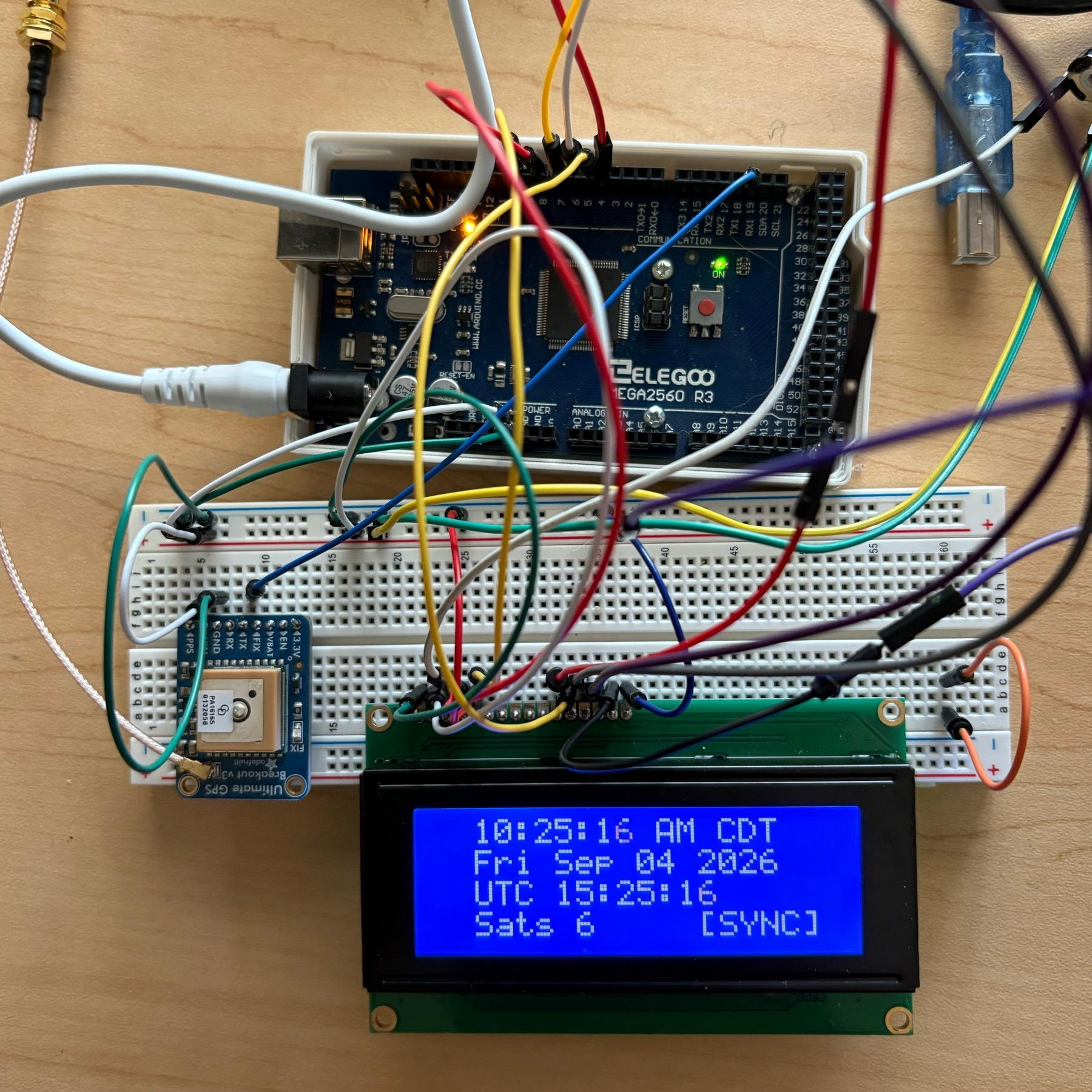
Albertine, Augustine, and Adafruit
Finished The Prisoner and waiting for The Fugitive to arrive. It should be here in time for some travel I have planned for next week - Seattle, this time. St. Louis is also on-deck, probably for the week after. Augustine is also going well, though I’ve only just started it. It’s doing a good job of fleshing out his world and circumstances in ways that his writings don’t. The Bishop of Hippo will make an oblique appearance in my homily this weekend, hot on the heels of his and his mother’s feasts. Not an accident.
Reflection: Albertine seems more real to me than the Narrator, which is weird, because to read these books is to inhabit his head nearly completely. This, I believe, is precisely because we don’t know her interior life any more than the Narrator does. I don’t know what’s going on in anyone else’s head unless they either tell me, and I trust their words, or I attempt an educated guess based on their circumstances. The guess has to be educated with some prior knowledge, though, and I have to hope that I’m not reading it wrong. Mr. Narrator doesn’t trust, probably reads it wrong a lot of the time, and by the end of things has gone nearly completely bananas. And what else is supposed to do, after all, given her background and situation? This is about as good as it gets, until it’s not and what happens happens.
I can’t say I was surprised by the end. I sort of knew it was coming anyway, but I am surprised that it took as long as it did. Yes, I’m generally aware of what comes next. For now I can be hopeful that she finds peace, solitude, or both.
Not Proust: I’m doing some electronics tinkering again, which for me means: poking at a lot of stuff and getting frustrated, finding a new path forward, but then waiting for parts to arrive. The end goal is to have a clock sync’ed to GPS for accuracy, and possibly serving as a stratum 1 time source here at home. If that didn’t make any sense to you, no worries. The good news is that the parts are mostly plug-and-play, if you happen to have them, and half this process is discovering that I don’t.
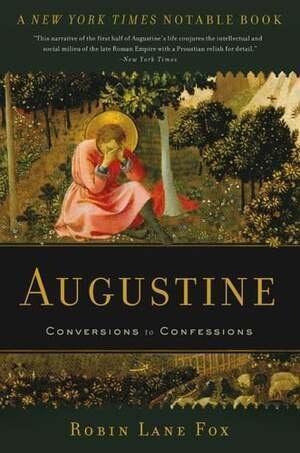
Currently reading: Augustine by Robin Lane Fox 📚
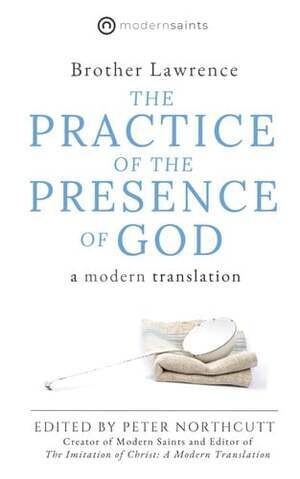
Currently reading: The Practice of the Presence of God: A Modern Translation by Brother Lawrence 📚
The burden of obligations
What we can say is that everything in our life happens as if we entered it bearing a burden of obligations contracted in an earlier life; there is nothing in the conditions of our life on this earth to make us feel any obligation to do good, to be scrupulous, even to be polite…All these obligations which do not derive their force from the here-and-now seem to belong to a different world founded on goodness, conscientiousness, sacrifice, a world quite different from this one, which we leave to be born on to this earth, and to which we shall perhaps return, to live under those unknown laws which we have obeyed because we carried their teaching within us without knowing who had written it there, these laws to which we are brought closer by any profound work of the intellect, and which are invisible — if ever wholly invisible — only to fools.
You’re so close, Narrator.
There and back again; Proust-posting 4
Quite the whirlwind, these past few days. Took off on Thursday and headed up to Delaware. We borrowed my father-in-law’s truck and towed a U-Haul trailer, following our daughter. We had to go a little slower because of the trailer, so what looked like a reasonable 12-hour drive turned into something quite a bit longer. Pulled into Newark late, crashed into bed, then got up Friday and moved her into the shared-space apartment. Finished quickly, rested, grabbed dinner, then turned around and headed home the next day. Sunday was two masses and an afternoon of altar-server training. Father took the younger group through the main positions during Mass. I took the older, more experience crew to the chapel to run through Exposition/Benediction. Dash back home, family dinner, tidy the house, and collapse into bed.
And now, welcome to Monday.
The household is one more kid lighter. The spaces and silences left behind will take some getting used to, though between phone calls and texting (including a separate dedicated group chat for a daily picture of the cat), we hope to stay more or less in-the-loop. The next departure will be #2 Son, who is getting married in October. By year-end, we’ll be down to three kids at home, which is a situation we haven’t seen in a long, long time. I keep thinking that things will calm down, but sometimes I sort of doubt it.
The Prisoner certainly has a different sort of vibe than the rest of the story so far. I’m enjoying it. Not really sure what Albertine sees in this guy, except maybe the apartment in Paris, all the gifts, and so forth. The translator’s introduction points out the general impossibility of the whole scenario: an unmarried middle-class girl living with an un-related man, so the whole things takes on the flavor of a thought-experiment. Another mystery: how, exactly, does this guy pay for all this? He’s not a writer beyond small things for Figaro, desperately searching the daily issues for his recent submissions. Inherited wealth from his father? The largess of friends? It’s not explained yet, so I guess it’s not important. Focus on the petri dish, not what else is on the table.
Trying to sort out the Narrator’s motives is occasionally maddening, but I think he gives away most of the game during an extended meditation about what he thinks he’s missing by keeping Albertine around at all. He imagines all the possibilities, all the assignations he could make with (literally) every young woman he passes, every shop-girl or dairy-maid. The endless worlds within them, and with them - it’s all he can stand. It’s the desire for desire which captivates him. He only wants Albertine when she’s not there, when he believes she’s somewhere else, secretly carrying on with someone else. The moment he imagines her in the arms of another, or even just somewhere else where he can’t see her, she regains the mystery of Balbec and he’s on fire or consumed by jealousy once again. In his apartment, or even in his bed, not so much.
Is she playing him, like Odette and Charles? Part of me wants to think so. It would give her some agency in this whole weird thing. I think part of him does to, in all honesty. As this is still a read-in-progress so perhaps all is revealed at some point. In the meanwhile, our hearts are restless O Lord.
En route: Brother Lawrence’s The Practice of the Presence of God. I would like to read more John Crowley, having recently learned of his passing. Little, Big is a gorgeously-written book. His Aegypt books come highly recommended but several of the volumes seem to be out of print at the moment; used copies are fetching a pretty penny.
The hot weather continues. I think the “Feels like” temperature got to 130 today. Yikes.
…men are all dried up
because the dog star parches their heads and knees and
the heat sears their skin. Then, ah then,
I wish you a shady ledge and your choice wine.
— Hesiod

The treasure of the Church
Finally had a chance to watch Tarkovsky’s Stalker this past weekend. It was excellent. I have Andrei Rublev on my to-watch list and can hopefully get to it soon. In other highbrow-culture news, I finished Sodom and Gomorrah and started The Prisoner. So far so good. I should invest in more tweed, even if I won’t be able to wear it for another few months. I’m committed to finishing the Recherche at this point, and am feeling the urge to dip back into genre stuff afterward. There’s the next volume of Elric stories, but I’ll probably save that for holiday reading.
This week we’ll be road-tripping towards the northeast to deposit a daughter at the university where she’ll be doing PhD work in physics. It will be a quick up-and-back sort of thing, but should be a nice drive.
Today is the Feast of St. Lawrence, Deacon and Martyr. Summoned by Valerian in order to surrender the treasure of the Church, Lawrence showed up leading a parade of the poor. “Here,” he said to the emperor, “is the treasure of the Church.” He was sentenced to death that same day.
Delaware? More like Dela-why amirite?
So the business travel was completed without incident. As a treat, I get to travel again next week to Denver. Chicago was nice. I was expecting it to be hot and/or smoky and it was neither. We lived there during my elementary-school years. I have fond memories of walking to school, and even walking home for lunch. The neighborhood was full of kids my age and everyone new everyone else. To summon us home in the evening, all my father had to do was go into our front yard and use his ear-splitting whistle. We’d hear him and come shambling back.
There was a radio tower visible in the distance (probably WBBM) from my bedroom window. One night my dad woke me up to see it covered in St. Elmo’s Fire. I’d never seen anything like it before and haven’t seen it since - weird blue flame stuff running up the guy lines.
Not-so-fond memories: we were living in the area when the worst airline crash in US history happened at O’Hare. You could see the smoke from the school. I remember asking a teacher if we should call somebody about it; she told me that people probably already knew. I also remember watching the news when they arrested serial killer John Wayne Gacy. When we moved to Atlanta, my dad’s transfer was expedited - someone seemed to be killing kids and for anyone working in law enforcement, it was all-hands-on-deck. The late-70s and early-80s were a weird time to be a kid.
In any event: looking forward to something of a long weekend and hopefully a bit of downtime. The garden needs weeding and the lawn could probably stand another cut thanks to all the rain. Looking ahead: road trip to deliver our student, a return to the rhythms of the school year, &c, &c.
Proust-posting 3
Making some headway in Sodom and Gomorrah. The Narrator has learned something Very Important about the Baron Charlus, attended another salon, and returned to Balbec. Our hero has once again been bowled over by involuntary memory, this time brought on by simple gesture in a familiar place. I can relate. I used to have very strong attachments to places, returning to former houses and other places often enough for it to become something of a running joke. It’s not as bad as it used to be, but I have definitely spend some time thinking about the why of it.
Proust describes something a bit different - the sudden onrush of memory and the grief which has finally caught up with him. Everything around him now has additional layers of meaning: the pleasant, sun-washed memories of that coastal summer inhabit every space, but over them, like a varnish, are recollections of his grandmother.
While I was still an acolyte, I was blessed to conduct the graveside rites for my grandmother and grandfather. She had held on to his ashes for years to be sure that they would be buried together, and so they were. I think of them often and felt especially close to them recently during Exposition, which happened to be on the Memorial of our Lady of Mount Carmel, which was my grandmother’s namesake.
The house where my grandparents lived in Tampa is long gone. Literally razed to the ground. There’s a gravel parking lot there now. The giant live oak tree which covered nearly their entire property is gone too, and it had probably stood there for a couple of centuries. The lot looks so small; it’s hard to believe that once upon a there was a house, swimming pool, and all the nooks and crannies that could absorb a child’s attention in the tropics of central Florida. True to habit, I drove past it the last time I was in the area, but I didn’t stop. I probably never will again.
Sometimes I wonder what those places will be for our own children and grandchildren. This tiny lot in West Tampa felt like an entire world when I was small; I can’t even imagine how our house and property today will fill our children’s and grandchildren’s minds.